





Speeeak制度で広がる語学学習と世界とのつながり
現地メンバーが紹介!インド子会社CIPLの仕事と日常②/ Introduction by Our Local Team: Work and Daily Life at Our Indian Subsidiary, CIPL 2
現地メンバーが紹介!インド子会社CIPLの仕事と日常①/ Introduction by Our Local Team: Work and Daily Life at Our Indian Subsidiary, CIPL 1
また引っ越しました。懲りてません!
社内表彰制度「これe-Jan!」アワードFY2025を開催しました!
初の4拠点開催!社内イベントSPRING MEETING 2026
各拠点で創立26周年をお祝いしました
Bridging Borders: My Experience with e-Jan and the Heart of Japan -3- 国境を越えて:e-Jan と日本の心に触れた私の経験 -3-
Bridging Borders: My Experience with e-Jan and the Heart of Japan -2- 国境を越えて:e-Jan と日本の心に触れた私の経験 -2-
Bridging Borders: My Experience with e-Jan and the Heart of Japan -1- 国境を越えて:e-Jan と日本の心に触れた私の経験 -1-
Workplace terms of address
Japan is known for its seniority culture, where levels of respect are dependent on seniority (age, experience, etc.), and this appears in the language of workplace culture as well.
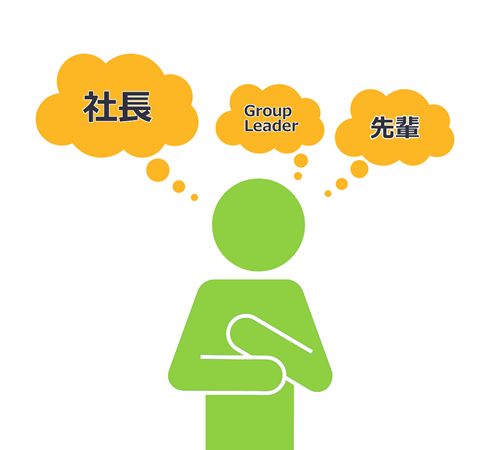
There are different terms of address used for different corporate positions, such as titles (department leader, director, etc.)
Other common terms of address are related to age, like the honorific senpai. (Note: in many cases, within the workplace, senpai is used for employees with more experience than you; however, this gets tricky to navigate in the case where you have more workplace experience than a person older than you. This is a thorny area even for Japanese people, so be sure to feel it out on a case-by-case basis.)
Different companies have different rules with regard to workplace titles and honorifics. Some are very strict, while others, not at all. At e-Jan Networks, corporate titles are rarely used, and everyone is addressed with the -san honorific.
These rules for workplace terms of address can be an indicator for the company’s culture and style, which is a notable factor when considering working in Japan.
As mentioned, every company has its own style, and navigating these often unspoken rules can sometimes be challenging, but with practice it becomes second-nature!
- N
There are different terms of address used for different corporate positions, such as titles (department leader, director, etc.)
Other common terms of address are related to age, like the honorific senpai. (Note: in many cases, within the workplace, senpai is used for employees with more experience than you; however, this gets tricky to navigate in the case where you have more workplace experience than a person older than you. This is a thorny area even for Japanese people, so be sure to feel it out on a case-by-case basis.)
Different companies have different rules with regard to workplace titles and honorifics. Some are very strict, while others, not at all. At e-Jan Networks, corporate titles are rarely used, and everyone is addressed with the -san honorific.
These rules for workplace terms of address can be an indicator for the company’s culture and style, which is a notable factor when considering working in Japan.
As mentioned, every company has its own style, and navigating these often unspoken rules can sometimes be challenging, but with practice it becomes second-nature!
- N